
What Is IPTV Guide 2026
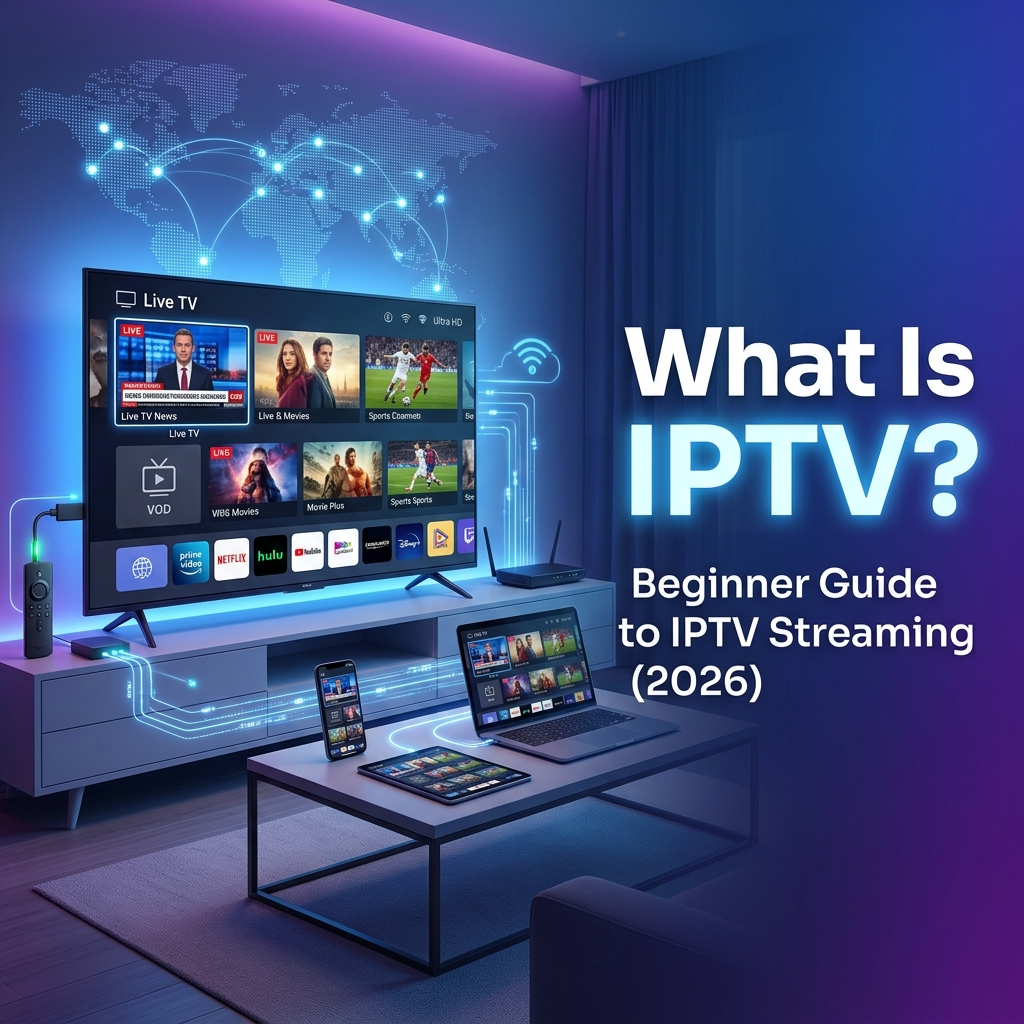
What Is IPTV? The Complete Beginner’s Guide for USA Users in 2026 If you have been asking what is IPTV and whether it can replace your cable subscription in 2026, you are in the right place. I’m Yassine, and after 3 years testing IPTV services on Amazon Firestick, Smart TVs, and Android boxes across the USA, I can explain exactly what IPTV is, how it works, and whether it is the right choice for your household — without the technical jargon that makes most explanations confusing. IPTV stands for Internet Protocol Television. In plain English, it means watching live TV channels, movies, and sports through your internet connection instead of a cable wire or satellite dish. Every major streaming service you already use — YouTube TV, Hulu Live TV, Sling TV, and ESPN+ — is technically an IPTV service. The difference is that third-party IPTV providers offer far more channels at a much lower monthly cost than these licensed platforms. This guide covers everything you need to know about IPTV in 2026 — how the technology works, what devices support it, how it compares to cable, what it costs, and how to get started today. If you are ready to set up IPTV on your Firestick right now, jump straight to our complete IPTV installation guide for Firestick. Why Millions of USA Households Are Switching to IPTV in 2026 Understanding what is IPTV starts with understanding why it has become the fastest-growing alternative to cable TV in the United States. The average American household pays $217 per month for cable TV and internet combined — and that number has increased every year for the past decade. IPTV delivers the same live channels, sports, and on-demand content for under $20 per month, using the internet connection you are already paying for. The cord-cutting movement in the USA accelerated dramatically between 2023 and 2026. Over 25 million US households cancelled cable subscriptions in that period, with the majority switching to a combination of streaming services and IPTV. The driving factors are simple: cost savings of $150-200 per month, no long-term contracts, no hardware rental fees, and the ability to watch on any device including Firestick, Smart TV, phone, and tablet simultaneously. IPTV also solves one of the biggest frustrations with traditional streaming services — fragmentation. Instead of paying separately for Netflix, ESPN+, Hulu, Peacock, and Paramount+ to get all the content you want, a single IPTV subscription delivers live sports, news, entertainment, and international channels in one place. For USA sports fans especially, IPTV is the only affordable way to get NFL, NBA, MLB, NHL, and UFC all in one subscription without paying cable prices. Now that you understand why IPTV has become so popular, let’s look at exactly how the technology works — because understanding the mechanics helps you choose the right service and troubleshoot issues when they arise. You can also check our dedicated guide on best IPTV for Firestick USA for a full breakdown of the top providers available today. How Does IPTV Work? The Technology Explained Simply To fully understand what is IPTV, you need to know how it delivers content differently from cable and satellite. Traditional cable TV sends a continuous signal through a physical coaxial wire to your home — your TV receives every channel simultaneously, and you simply tune to the one you want. Satellite TV works the same way but uses a dish to receive a broadcast signal from space. Both methods are one-directional and always-on. IPTV works completely differently. Instead of broadcasting all channels simultaneously, IPTV sends only the channel you are currently watching — on demand, as a compressed data stream over your internet connection. This is the same technology that Netflix uses to stream movies, except IPTV applies it to live TV channels and sports broadcasts in real time. The result is a more efficient system that uses far less bandwidth and can be accessed from any device with an internet connection anywhere in the world. Feature Cable TV Satellite TV IPTV Delivery method Physical coaxial wire Satellite dish Internet connection Hardware required Cable box + installation Dish + receiver Any smart device Average monthly cost $80–$150 $60–$120 $10–$20 Contract required Usually 1–2 years Usually 2 years No contract Channel count 200–500 150–330 10,000–25,000+ 4K content Limited Limited ✅ Wide availability International channels Very limited Limited ✅ Thousands Works on Firestick ❌ No ❌ No ✅ Yes IPTV content is delivered in three formats. Live IPTV streams channels in real time — exactly like cable, but over the internet. Time-shifted IPTV allows you to pause, rewind, and replay live TV — a feature cable charges extra for. Video on Demand (VOD) gives you access to a library of movies and TV series you can watch at any time. Most premium IPTV subscriptions include all three formats in a single package. Network type matters more for IPTV than most users realize. A wired Ethernet connection eliminates Wi-Fi buffering entirely — the Amazon Ethernet Adapter for Fire TV Stick costs under $15 and is the single most effective upgrade for any Firestick IPTV setup. If wired is not possible, use the 5 GHz Wi-Fi band and position your router as close to your device as possible. The technical infrastructure behind IPTV consists of a content server (where the channels are hosted), a middleware platform (which manages user authentication and channel delivery), and a client application on your device (the IPTV player app). Understanding this three-layer structure helps explain why provider quality varies so much — the server infrastructure is what determines whether your stream is stable or constantly buffering. Now let’s look at exactly what devices support IPTV and which one is right for your setup. What Devices Support IPTV in 2026? Full Compatibility Guide One of the biggest advantages of IPTV over cable is device flexibility. Understanding what is IPTV means understanding that it works on virtually any internet-connected screen — from your living room TV to your smartphone. Here is
Is IPTV Legal in the USA? Complete 2026 Legal Guide for Streaming Users
Is IPTV Legal in the USA? Complete 2026 Legal Guide for Streaming Users If you are considering an IPTV subscription in 2026, the first question most American viewers ask is straightforward: is IPTV legal in the USA? The direct answer is yes — IPTV technology is completely legal in the United States. I’m Yassine, and after 3 years testing and reviewing IPTV services for USA households, I can tell you that legality depends entirely on the provider you choose, how content is licensed, and whether the service operates with transparency and proper authorization. This guide breaks down exactly how U.S. copyright law applies to IPTV, what separates a legitimate provider from an unlicensed one, and how to make a safe and informed decision before subscribing. Whether you are watching live sports, news, or international TV — this covers every scenario for US viewers in 2026. Already using IPTV on your Firestick and running into issues? See our step-by-step fix guide: Fix IPTV Login Error on Firestick (2026). Is IPTV Technology Legal in the USA? Yes — IPTV technology itself is fully legal in the United States. Internet Protocol Television (IPTV) is simply a method of delivering television content over an internet connection instead of through cable or satellite. Every major streaming platform Americans use daily — Netflix, Hulu, YouTube TV, Disney+, and Amazon Prime Video — runs on IPTV infrastructure. The legality question that genuinely matters is not about the technology. It is about the provider distributing that content. A licensed provider with proper content agreements operates legally. An unlicensed service redistributing copyrighted content without authorization does not. Understanding this distinction is the most important thing any IPTV subscriber in 2026 needs to know before asking is IPTV legal in the USA for their specific setup. Want to understand how IPTV apps work on Firestick first? Read our full setup guide: How to Install IPTV on Firestick in 2026. What U.S. Law Says About IPTV in 2026 In the United States, IPTV services are governed primarily by two legal frameworks that every subscriber should understand before choosing a provider. The Digital Millennium Copyright Act (DMCA) — Passed in 1998, the DMCA makes it illegal to distribute copyrighted content without proper licensing or authorization. Any IPTV service that streams live TV channels, sports events, or on-demand movies without rights agreements violates this law — not the subscriber using legitimate technology, but the provider operating without authorization. The No Electronic Theft (NET) Act — This law makes it a federal offense to reproduce or distribute copyrighted works, including through digital streaming. It reinforces why provider licensing matters when evaluating whether is IPTV legal in the USA applies to any specific service. For subscribers, the practical takeaway is clear: choosing a transparent IPTV provider with a structured subscription model protects you from any legal gray areas. If a service has no clear pricing, no support, and no verifiable business structure, that is the service to avoid. Official U.S. copyright information is available directly from the U.S. Copyright Office. Legal IPTV Providers vs Unlicensed Services — Key Differences The clearest way to evaluate whether an IPTV service is operating legitimately is to compare what transparent providers offer versus what unverified services typically look like. Use this comparison before subscribing to any IPTV service in 2026. When evaluating any IPTV subscription, use this checklist as your starting reference. A professional provider will have answers to all of the above before you spend a dollar. Understanding is IPTV legal in the USA for your specific provider comes down to these eight criteria. For full provider comparisons see our best IPTV services guide and IPTV service provider guide. Feature Legal IPTV Provider ✅ Unlicensed Service 🚨 Subscription page Public pricing — monthly, quarterly, annual No pricing page or hidden costs Customer support Email or live chat — verified response time Telegram only or no support Free trial 24-hour trial — no credit card required No trial or payment required upfront Refund policy Published and accessible on-site No refund policy listed Business structure Registered company — verifiable online Anonymous — no verifiable identity Channel list Published sample or full list available Unlisted or claims unlimited everything App compatibility Works with Smarters, TiviMate, XCIPTV Custom app only — no App Store presence Content licensing Structured agreements with content providers No licensing — unauthorized redistribution When evaluating any IPTV subscription, use this checklist as your starting reference. A professional provider will have answers to all of the above before you spend a dollar. For full provider comparisons see our best IPTV services guide and IPTV service provider guide. How to Choose a Legal IPTV Provider in the USA (2026) Choosing the right IPTV service is not just about finding the cheapest price. It is about selecting a provider that operates transparently, delivers consistent performance, and gives you a secure streaming experience. Here is how to confirm is IPTV legal in the USA for any specific service you are considering. Check for a clear subscription page Any legitimate IPTV provider publishes its pricing openly. Monthly, quarterly, and annual plans should be clearly listed with exact pricing and included features. If you cannot find a pricing page or the price is only revealed after you provide personal information, move on. Transparent pricing is the single most reliable indicator of a legitimate provider. A properly structured subscription allows you to compare plans, understand what is included, and make an informed decision before any payment is required. Verify the provider has real customer support Legitimate services offer email or live chat support with verifiable response times. Before subscribing to any IPTV service, send a test message to their support channel and evaluate both response time and the quality of the answer. A provider that only communicates through anonymous Telegram channels or social media DMs — with no email address or website contact form — is operating without accountability. Professional support is not optional for a legal IPTV provider in 2026. Test before you